
DNSSEC: What is it and why is it important?
Internet security is an increasing priority. The Domain Name System (DNS) is a fundamental part of the web infrastructure, but due to its original design, it lacks robust security mechanisms. This is where DNSSEC (Domain Name System Security Extensions) comes into play, an extension of the DNS protocol that protects the integrity and authenticity of the information being transmitted.
Throughout this article, we will see what DNSSEC is, how it works, its benefits, how to implement it, and also its limitations.
What is DNSSEC?
DNSSEC is a set of security extensions for the DNS protocol that allows verification that DNS responses come from a legitimate source and have not been altered during transmission. Its main goal is to prevent attacks such as DNS cache poisoning and man-in-the-middle attacks, which can severely compromise user security, as attackers can not only intercept but also modify data in transit, alter communications, or inject malicious content.
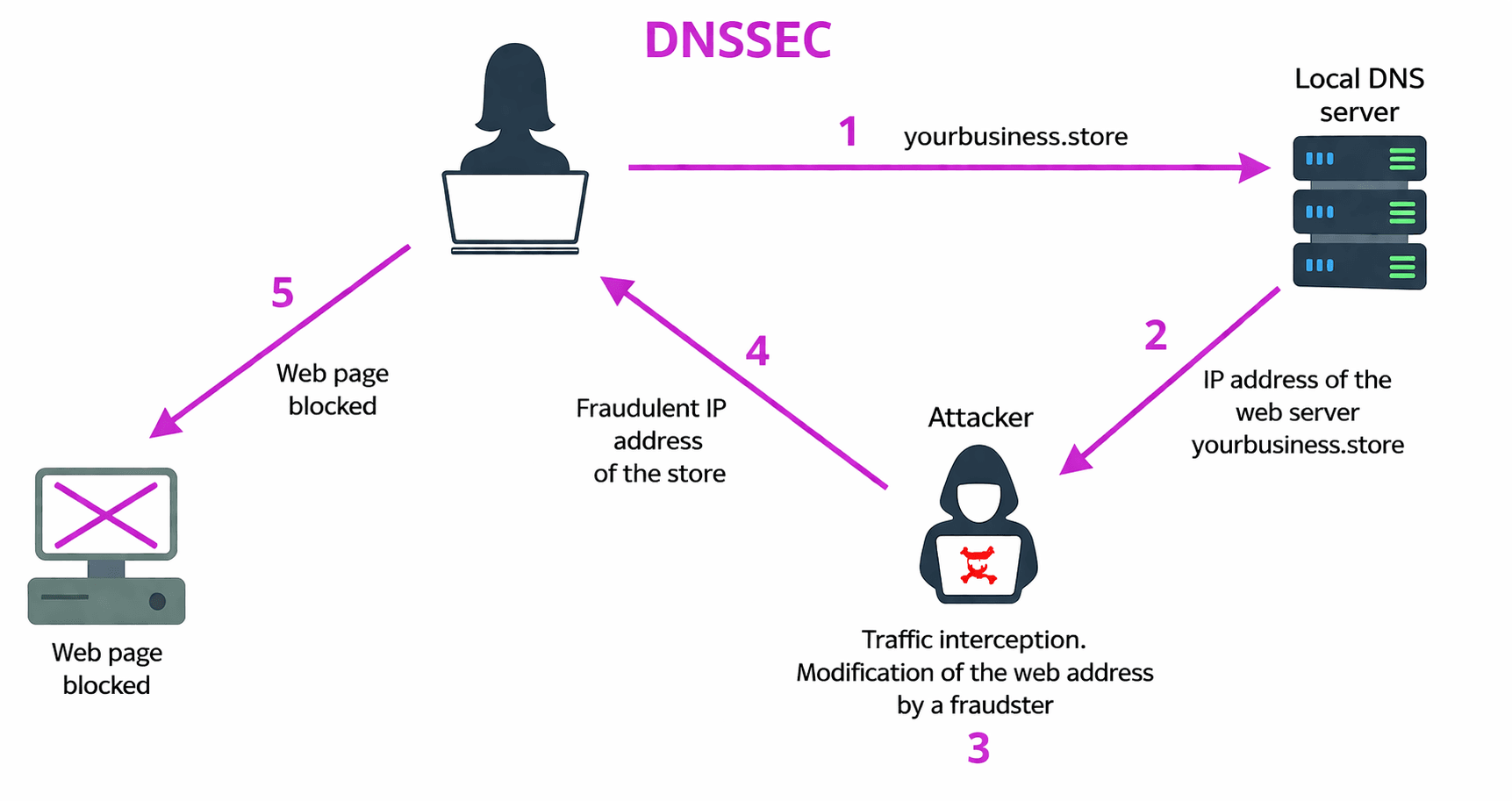
By implementing DNSSEC, each DNS response includes a digital signature based on public key cryptography, which can be verified by the DNS resolver to confirm its authenticity.
How does DNSSEC work?
DNSSEC adds a layer of cryptographic validation over DNS name resolution. Its operation is based on the following elements:
- DNSKEY: cryptographic keys used to sign and validate DNS data.
- RRSIG Records: contain the digital signature of the set of DNS records.
- DS Record: links the domain’s public key with its parent zone, establishing a chain of trust.
When a user tries to access a website, the recursive resolver queries the DNS records and validates the digital signature with the public key. If the signature is valid, the response is accepted. If not, the information is considered potentially dangerous, and access is blocked.
Benefits and why is DNSSEC necessary?
Implementing DNSSEC brings several key advantages:
- ✅ Protection against tampering: prevents attackers from modifying or forging DNS responses.
- ✅ Increased trust: by ensuring the authenticity of the information, users can trust they are accessing the correct site.
- ✅ Prevention of cache poisoning attacks and malicious redirects.
- ✅ Better reputation for your brand or project: conveying security is a key factor for user experience.
In an increasingly digitized environment, protecting DNS communications is a priority for companies, professionals, and system administrators.
Can I know if my website has DNSSEC?
Yes. There are online tools like dnssec-analyzer.verisignlabs.com or dnssec-debugger.verisignlabs.com where you can enter your domain and check if DNSSEC is correctly enabled and configured.
If you already have your domain registered with cdmon, you can check this information and activate DNSSEC from the domain control panel. We explain how to do it later.
Implementing DNSSEC on your domain
Activating DNSSEC on your domain may seem complex, but with the right tools, it is a fairly accessible process. Below, we show you the necessary steps and prerequisites to carry it out successfully.
Prerequisites for implementing DNSSEC
Before activating DNSSEC, make sure to:
- Have a registrar that supports DNSSEC (like cdmon). Not all domain providers offer this extra layer of security for free.
- Have access to the domain’s DNS configuration panel.
- Know how to manage the public and private keys for signing.
- Verify that the name server used is compatible with DNSSEC.
How to activate DNSSEC on your name server
If you manage your domains with cdmon, activating DNSSEC is simple:
- Access the cdmon‘s Control Panel.
- Go to the «Domains» section and select the one you want to protect.
- In the DNS configuration, activate the DNSSEC option.
- Save the changes and ensure the DS record is correctly linked.
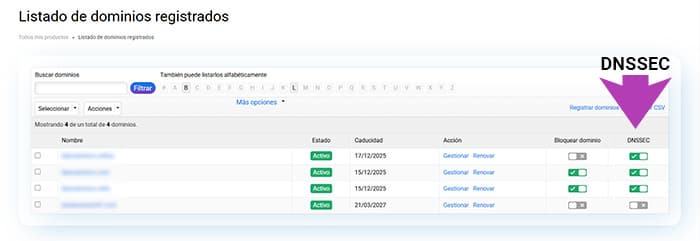
👉 You can also follow this step-by-step guide in our support center: How to activate DNSSEC for your domain
From that moment on, your domain will be protected against many common threats in name resolution.
Limitations and challenges of DNSSEC
Although DNSSEC is a great improvement in DNS security, it also presents some challenges:
- ⚠️ Complexity in key management: they need to be rotated periodically and stored securely.
- ⚠️ Increased administrative load: both for configuring and maintaining it.
- ⚠️ Compatibility: not all providers and tools are fully compatible.
- ⚠️ Larger DNS response sizes, which can affect some poorly configured devices or networks.
Despite these limitations, the security benefits it provides make it a highly recommended measure to protect your online presence.
At cdmon, we are committed to security and stability. If you want to protect your domains with DNSSEC, visit our domains section and manage it easily from the panel.

By: Marina Moreno
She works on cdmon's marketing team, creating content that helps businesses, professionals, and creators better understand the world of hosting, domains, and online presence. She is especially interested in how artificial intelligence, search engines, and digital communication are evolving, and enjoys translating technical concepts into language that anyone can understand.
You can learn more about her background on LinkedIn


