
Individual DKIM: what changes in your email and why it’s important to set it up
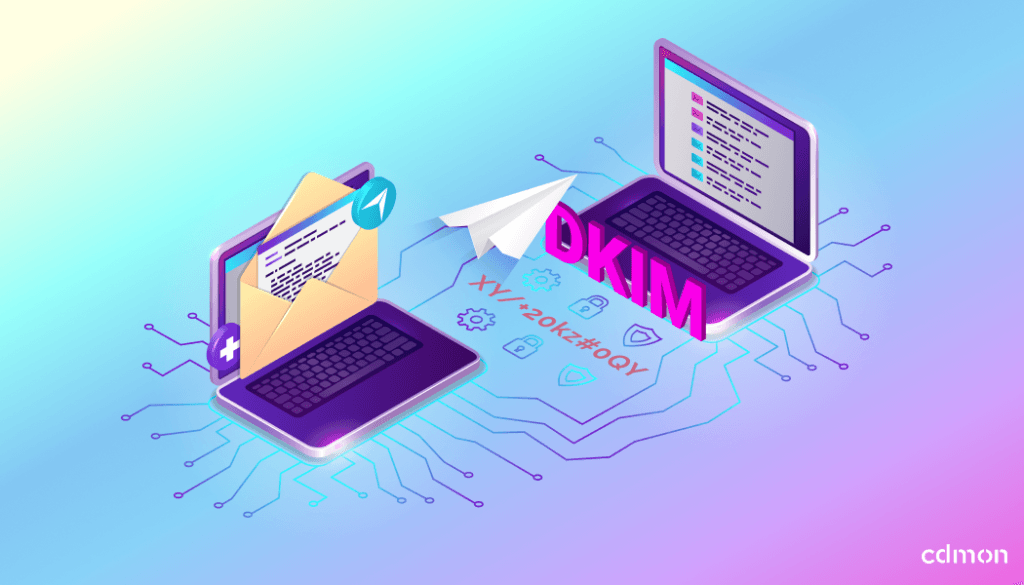
For many years, sending an email was simple. You wrote the message, pressed «send,» and that’s it.
The problem is that the Internet also quickly learned to spoof senders.
And that’s where one of the biggest headaches of modern email began: phishing, identity theft, and fraudulent emails that appear to come from legitimate domains.
That’s why today there are systems like SPF, DKIM, and DMARC. Three protocols that work together to prove that an email has indeed been sent by who claims to have sent it.
At cdmon, we have been talking about this for a while and explaining how these authentication mechanisms work. In fact, if you want to understand well how they relate to each other, we recommend taking a look at our article on email security: SPF, DKIM, and DMARC.
But now there is an important novelty: the step towards individual DKIM.
It may sound technical, but it actually responds to something basic: that each domain has its own identity when sending emails.
And that, nowadays, matters much more than it seems.
What is individual DKIM (and why it changes the rules)
Individual DKIM allows each domain to sign its emails with its own independent key.
DKIM (DomainKeys Identified Mail) is the system responsible for adding a digital signature to email messages. That signature serves to verify two things:
- that the message really comes from an authorized domain
- that the content has not been modified during sending
Until now, many services used shared signatures among multiple domains. In the case of cdmon, emails were authenticated through the domain *.srv.cat.
It worked. And it is still valid.
But the email ecosystem has changed a lot recently.
The major email providers—like Gmail or Yahoo—are increasingly strict with authentication. It’s no longer enough to «send emails correctly.» You also have to clearly and consistently demonstrate who you are as a sender.
And that’s where individual DKIM comes in.
Because when each domain has its own signature:
- reputation is no longer shared
- authentication is much more aligned with DMARC
- email providers have more confidence in the messages sent
- deliverability and spam issues are reduced
In other words, your domain gains its own identity within the email ecosystem.
SPF, DKIM, and DMARC: why they work together
Although they are often explained separately, the reality is that SPF, DKIM, and DMARC are part of the same trust system.
Each one fulfills a different function:
| System | What does it do? |
|---|---|
| SPF | Defines which servers can send email on behalf of your domain |
| DKIM | Digitally signs the messages |
| DMARC | Verifies and applies policies on SPF and DKIM |
Or put less technically:
- SPF says who can send
- DKIM proves that the message is authentic
- DMARC decides what to do if something fails
The problem is that, for a long time, many domains had partial, shared, or poorly aligned configurations.
And precisely for that reason, individual DKIM has become so important: it helps all that authentication fit much better.
What really improves with individual DKIM
The big difference is in reputation and trust.
With a shared DKIM, several domains use the same signature. That means part of the reputation is shared among different senders.
With individual DKIM, each domain builds its own.
That has important implications.
For example:
- improves alignment with modern DMARC policies
- increases the trust of email providers
- reduces false positives of spam
- improves deliverability
- makes misuse or impersonation more difficult
And although many times these changes are invisible to the end user, they do directly affect something critical:
That your emails reach where they need to go.
What is the difference between a shared DKIM and an individual DKIM?
The main difference is in how each domain is identified in front of email servers.
| System | How does it work? | Impact |
|---|---|---|
| Shared DKIM | Several domains use the same signature | Less control and shared reputation |
| Individual DKIM | Each domain has its own signature | Better reputation and more precise authentication |
With a shared system, the reputation partially depends on the collective behavior of other domains using the same signature.
With individual DKIM, the email reputation depends solely on your domain.
This is especially important when you use strict DMARC policies or send commercial emails, newsletters, or transactional emails.
How to know if your domain already uses individual DKIM
If you are a cdmon user and want to check the configuration status or ensure everything is correctly validated, you can do so from the email authentication panel.
And if you use external DNS or simply want to review how the system works step by step, you can consult our specific guide on how to configure individual DKIM on your domain.
Email no longer works like it did ten years ago
It’s been a while since email stopped being a system based solely on trust.
Today everything is validated.
Providers continuously analyze signals such as:
- domain reputation
- SPF authentication
- DKIM signatures
- DMARC alignment
- historical sending behavior
That’s why standards are constantly evolving.
And that’s why we increasingly see more changes focused on reinforcing individual authentications and reducing generic or shared configurations.
Individual DKIM is precisely part of that evolution.
Not because the previous system was insecure, but because the current ecosystem demands much more precise and aligned authentication.
The goal is not «to have more DNS records»
The goal is to generate trust.
Because when a server receives an email from your domain, even before showing the message to the recipient, it asks a simple question:
«Can I trust this sender?»
SPF, DKIM, and DMARC exist precisely to answer that question.
And individual DKIM is one more step in that direction.
More control, alignment, and reputation.
And much more prepared authentication for current email standards.
Conclusion
Email authentication is no longer a «technical extra.» It is a fundamental part of the digital reputation of any domain.
Individual DKIM helps reinforce that own identity, improves alignment with DMARC, and contributes to emails reaching their destination correctly.
And although the change often happens transparently, understanding what’s behind it remains important.
Because in modern email, it’s not just about sending messages.
It’s also about proving that they really come from you.

By: Miriam Chica
She is part of cdmon's development team. Her background combines experience in technical support and software development, allowing her to clearly explain how technologies such as DNS, servers, and Internet security work. On the cdmon blog, she shares content that helps readers understand technical concepts in a clear and accessible way.
You can learn more about her background on LinkedIn


