
What are DNS? Records and Servers
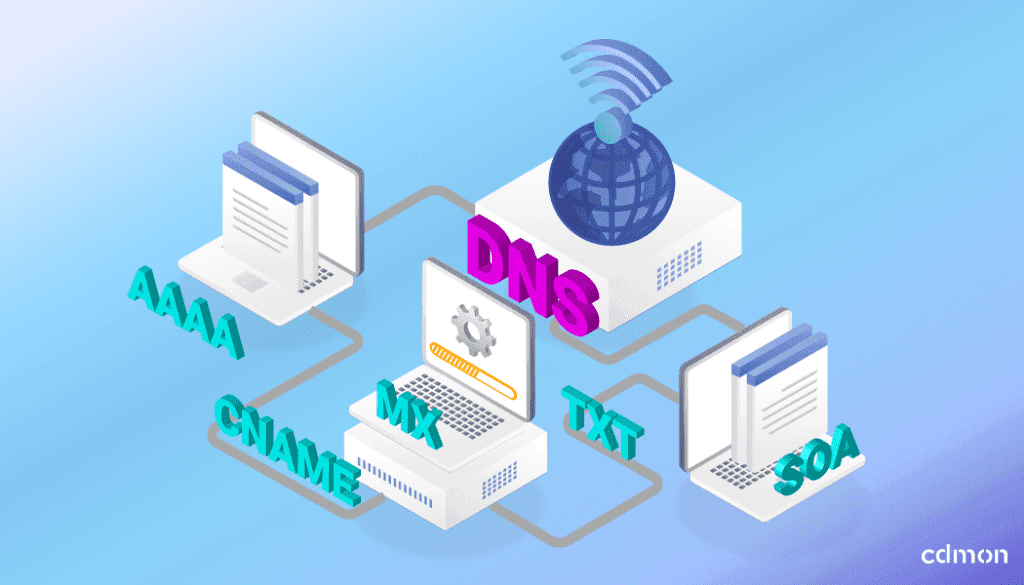
The DNS are one of the invisible pillars of the Internet. Every time you visit a web page, send an email, or watch a video online, you are using the domain name system. Despite their importance, for many users, DNS remains an abstract concept. In this article, we explain what DNS is, how it works, what records exist, and how you can manage them effectively from your control panel.
What is a DNS and why is it important?
DNS stands for Domain Name System, or Domain Name System. Its function is to translate human-readable domain names (like cdmon.com) into IP addresses understandable by servers (185.37.228.10, for example).
Thanks to DNS, you don’t need to memorize complex numerical sequences to access your favorite sites. This system acts like a gigantic Internet phone book, connecting names with addresses. Without DNS, browsing the web would be practically impossible for users.
In addition to this basic function, DNS is also vital for sending emails, authenticating services, domain security, and much more.
How DNS works
When you type a web address into your browser, a DNS query is initiated that follows these steps:
- Query to the resolver: Your device asks the configured DNS server (often your Internet provider’s).
- Recursive query: If the resolver doesn’t have the answer, it searches other DNS servers until it finds it.
- Response and cache: Once the IP is found, the system responds to the browser and temporarily stores that information to speed up future queries.
This process happens in milliseconds and allows for a smooth browsing experience.
How to manage and configure your DNS records
Managing your domain’s DNS records allows you to control where your web, email, or subdomain services point. In cdmon, you can easily configure your domain settings from the control panel with full autonomy.
Basic steps:
- Access the client panel.
- Select the domain you want to modify.
- Enter the «DNS Management» section.
- Add, edit, or delete records according to your needs.
Correctly configuring the records is key for your website and associated services to function properly and be well protected.
Types of DNS records
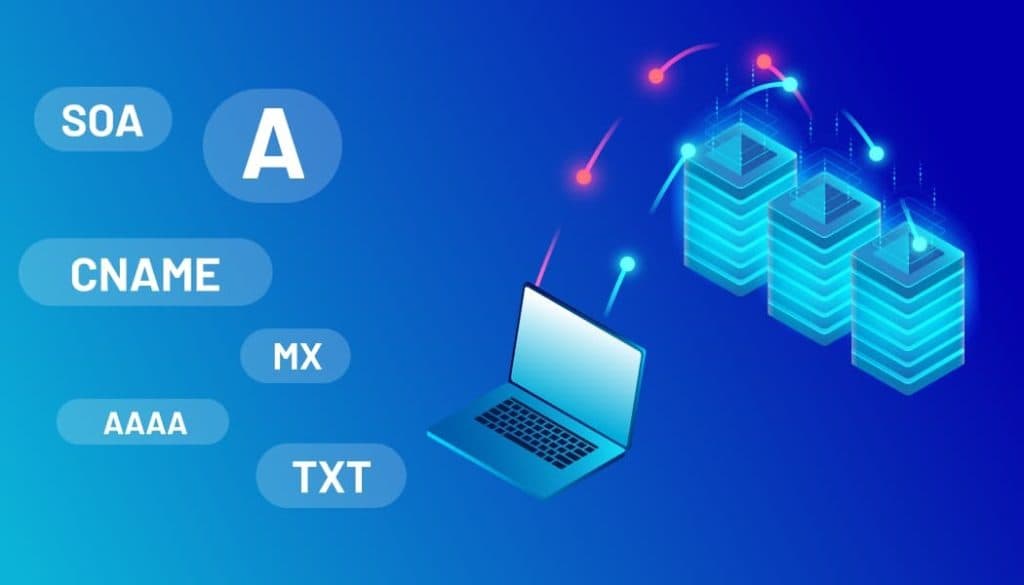
There are various types of DNS records, each with a specific function. Below, we explain the most important ones:
A and AAAA Records
- A Record: Associates a domain name with an IPv4 address (for example, 185.37.228.10).
- AAAA Record: Same as A, but for IPv6 addresses.
These are the most common and serve to point a domain to a specific server.
📈 Example:
mydomain.com. IN A 185.37.228.10
mydomain.com. IN AAAA 2a00:1234:abcd::1CNAME Records
The CNAME record (Canonical Name) is used to redirect a subdomain to another domain.
📈 Example:
www.mydomain.com. IN CNAME mydomain.com.This avoids duplicating configurations when you want several subdomains to point to the same place.
MX Records
The MX records (Mail Exchange) determine which server should receive the emails sent to your domain.
📈 Example:
mydomain.com. IN MX 10 mx1.cdmon.net.
mydomain.com. IN MX 20 mx2.cdmon.net.In cdmon, you can easily configure your MX records to use our professional email service.
TXT Records
The TXT records allow you to add text information to your DNS, very useful for:
- Domain verification in tools like Google Search Console.
- Configuring SPF, DKIM, and DMARC policies, very important for improving the security of your email service.
📈 SPF Example:
mydomain.com. IN TXT "v=spf1 include:_spf.cdmon.net ~all"These records help combat spam and ensure the authenticity of messages sent from your domain.
SOA Record
The SOA record (Start of Authority) contains information about the authority of the DNS zone, including:
- The primary name server.
- The administrator’s email.
- The zone’s serial number (used to know if there are changes).
- Update, retry, and expiration intervals.
This record is essential for the proper functioning of DNS zones and their synchronization between servers.
Conclusion
The DNS are the backbone of the Internet. Understanding what they are, how they are configured, and what types of records exist will allow you to have greater control over your online services.
In cdmon, we offer you an advanced, intuitive, and fully customizable DNS management system so you can adapt your domain to your needs, whether for web hosting, email, or subdomains.
🔗 Explore our domain services: Domain registration with advanced DNS
🔗 Protect your infrastructure with DNSSEC and SSL certificates: Security in cdmon

By: Miriam Chica
She is part of cdmon's development team. Her background combines experience in technical support and software development, allowing her to clearly explain how technologies such as DNS, servers, and Internet security work. On the cdmon blog, she shares content that helps readers understand technical concepts in a clear and accessible way.
You can learn more about her background on LinkedIn


