
The life cycle of domains: easy explanation
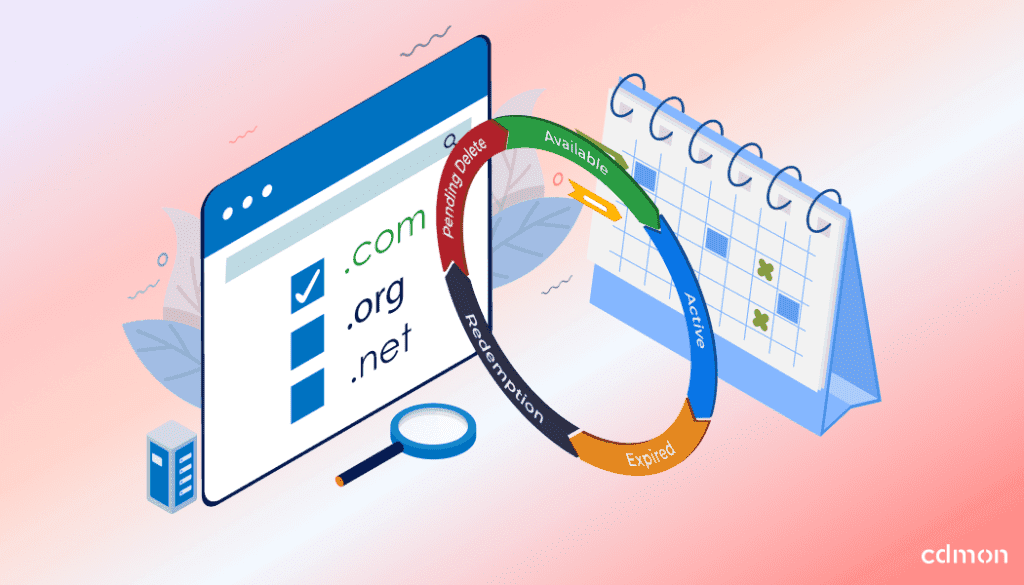
Table of contents
What is the lifecycle of a domain?
The lifecycle of a domain is the set of stages that a domain name goes through from the moment it is first registered until it can eventually be deleted and become available for anyone else to register. It is a process regulated by registrars and the policies of each domain extension (TLD).
Why is it important to know?
Knowing the lifecycle of domains is key to avoiding unnecessary losses, acting in time in case of expiration, and keeping your web projects operational without interruptions. Understanding each phase will allow you to make informed decisions, avoid additional charges, and protect your online brand.
If you still don’t know what a domain is, we recommend reading this article: What is a domain? Easy explanation.
Phases of the domain lifecycle
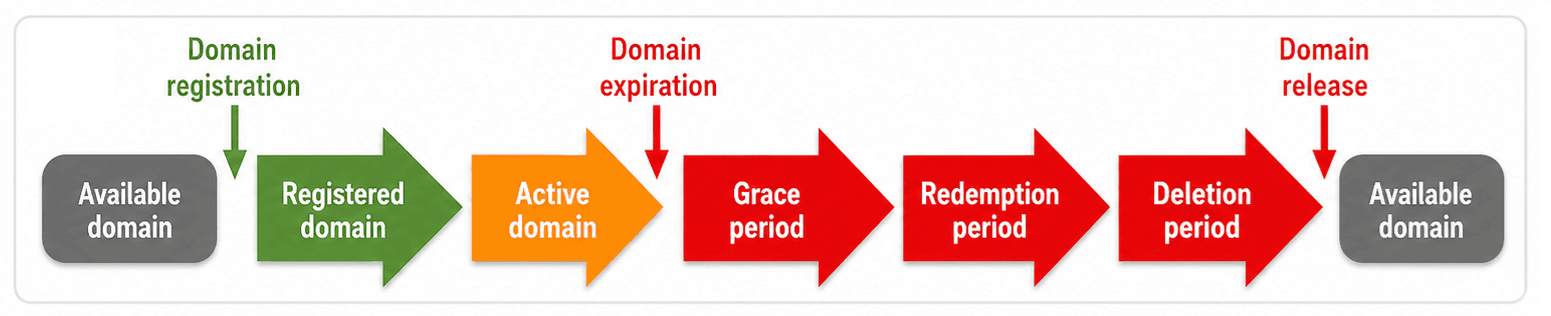
The cycle consists of several consecutive phases. Each represents a moment in the existence of the domain, with technical, administrative, and economic implications.
Initial Registration
This is the first stage. It occurs when someone registers an available domain name through an accredited provider like cdmon. The minimum period is usually one year, although you can opt for several years from the start. The domain holder acquires all usage rights while it is valid. Registering a domain at cdmon is effortless thanks to its smart search and suggestion tools.
We recommend this reading to help you choose well: How to register the perfect domain.
Active Period
During this phase, the domain is fully functional. Services such as web pages, emails, and SSL certificates can be associated. The holder can renew, transfer, or modify the domain settings freely. It is the ideal phase to manage your services and establish your online presence.
Grace Period
If the domain is not renewed at the end of the active period, it enters what is known as the “grace period.” It is a kind of free extension that allows you to renew the domain without surcharges. The duration of this period varies depending on the extension, but it usually ranges from 0 to 45 days. During this time, the domain is technically expired, but the holder can still recover it easily.
Redemption Period
If the holder does not act during the grace period, the domain enters redemption. This phase usually lasts about 30 days. The domain is no longer operational, and restoring it involves an additional cost. However, it is still reserved for the previous owner. It is the last warning before the final loss. It is advisable to act before reaching this point to avoid unnecessary costs.
Pending Delete Period
If restoration is not done within the redemption period, the domain enters a phase called “Pending Delete.” It has a short duration, generally 5 days, during which the domain can no longer be recovered by its former holder. It is the technical deletion process by the registry. At the end, the domain is released and returns to the market.
Availability for New Registration
After completing the previous cycle, the domain becomes fully available for anyone to register. If it is an interesting domain, other users may be on the lookout to capture it as soon as it is released. At cdmon, you can activate notifications to know when a domain is free.
Practical Example of a Domain’s Lifecycle
To better visualize the phases, imagine you register a domain on January 1, 2025:
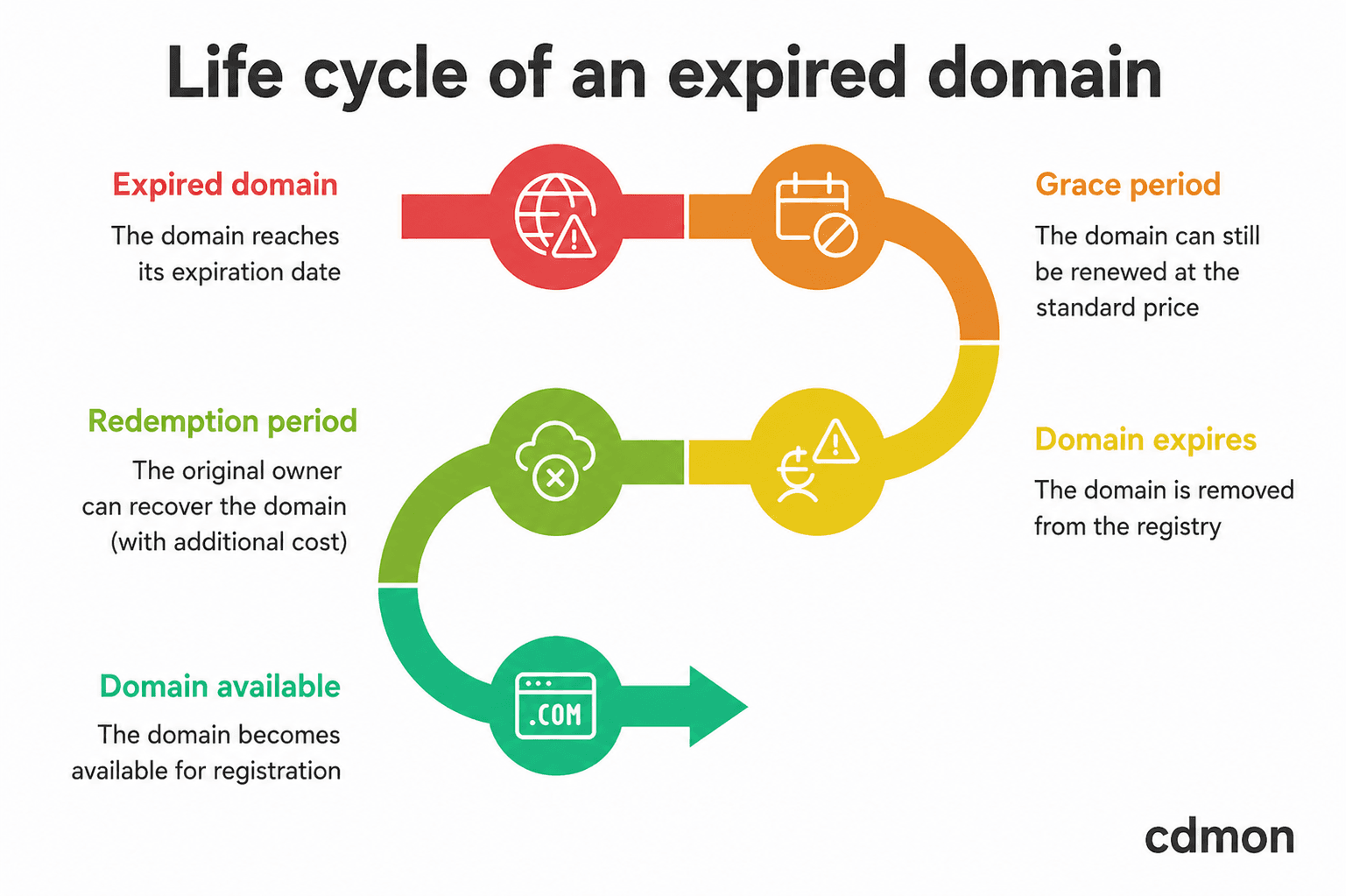
Representing these dates in a timeline or infographic can help you better visualize each stage. At cdmon, we show you the status of each domain and its critical dates in your control panel.
Keep in mind that depending on the domain extension, you may find that the times for each state are different or that some states are not contemplated.
Therefore, if you have any questions about the lifecycle of your domain, consult the following help or contact our technical department by clicking here.
Frequently Asked Questions about the Domain Lifecycle
Can I recover an expired domain?
Yes. If the domain is in the grace or redemption period, you can renew it. At cdmon, we notify you in advance and facilitate the process from your panel.
How long does the redemption period last?
It usually lasts 30 days, although it may vary depending on the domain extension. We recommend renewing it during the active or grace period to avoid extra costs.
What happens if I don’t renew my domain on time?
The domain will go through all the mentioned phases until it becomes available again to the public. During that process, your website and associated services will cease to be active.
When can I re-register a deleted domain?
Once the “Pending Delete” period is over, the domain will be released and can be registered by anyone from platforms like cdmon.
Will I lose all my data if the domain expires?
Yes. Once the domain is deleted, all linked information may be lost. Therefore, it is essential to renew it on time.
Tips to Avoid Losing Your Domain
- Activate automatic renewal from the cdmon client panel. It’s the best way to avoid forgetfulness.
- Set up personalized alerts via email or SMS to receive reminders before expiration.
- Keep your contact details updated. Many domain losses are due to notifications not reaching old emails.
- Periodically review your domain portfolio, especially if you manage multiple names. Centralized control avoids errors.
- Renew in advance. Don’t wait until the last day; you can do it at any time during the active period.
Useful Resources
- Help Center and FAQ about domains from cdmon
- cdmon Blog: tips and news from the world of hosting and domains
Conclusion
Understanding the lifecycle of a domain is essential to protect your online presence, avoid interruptions in your services, and anticipate critical situations. Each phase offers opportunities and risks that can make the difference between keeping your digital name or losing it forever.
At cdmon, we accompany you at every stage, offering clear tools, timely notifications, and specialized support. Our goal is for you to have full control over your domains, without surprises or complications.
Don’t have your domain yet? Take the first step towards your digital presence with cdmon. Discover how easy it is to start today and register your ideal name from our platform: Register your domain at cdmon.

By: Miriam Chica
She is part of cdmon's development team. Her background combines experience in technical support and software development, allowing her to clearly explain how technologies such as DNS, servers, and Internet security work. On the cdmon blog, she shares content that helps readers understand technical concepts in a clear and accessible way.
You can learn more about her background on LinkedIn


